


The origins and training: Andrea Cesalpino, an Arezzo talent
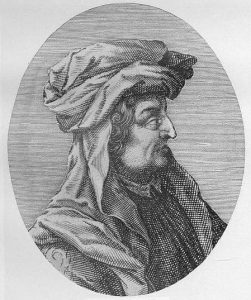
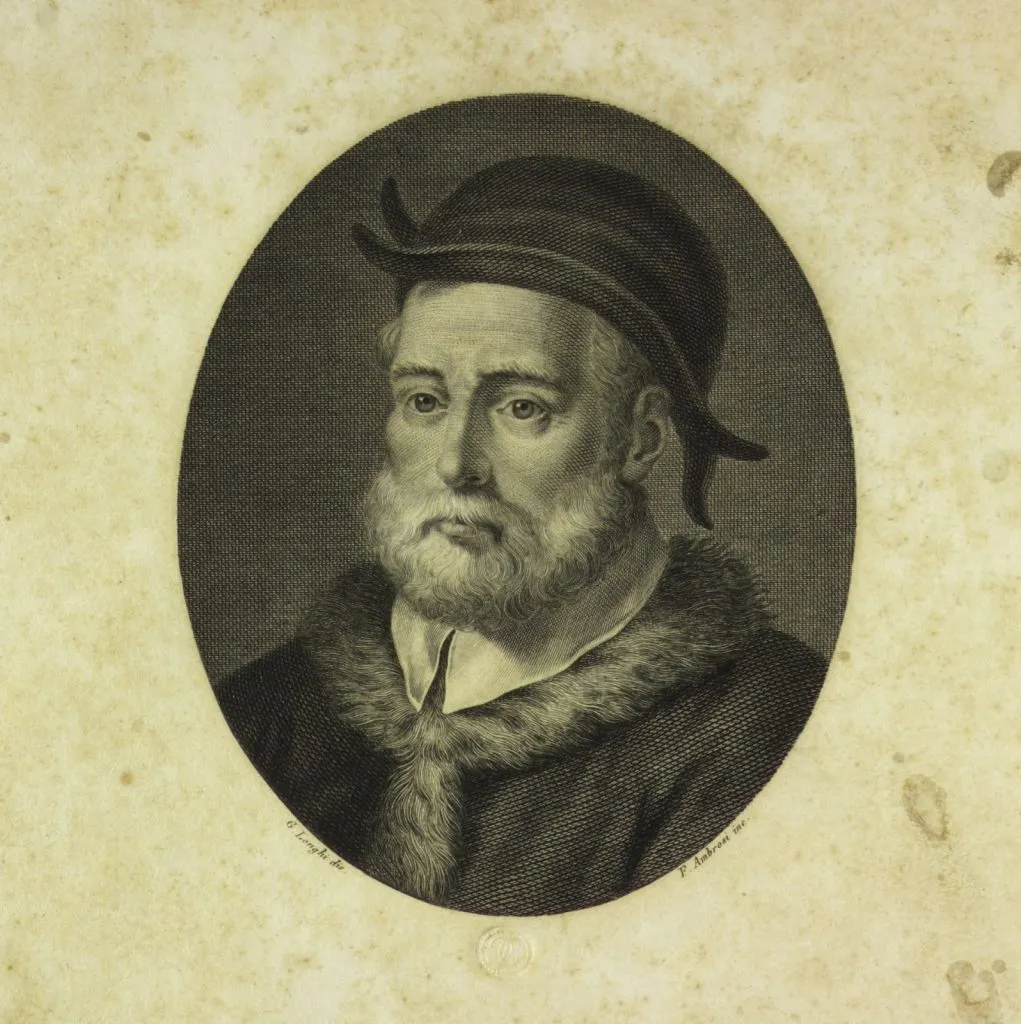
Andrea Cesalpino was born in Arezzo in 1524 or 1525, into a family of Lombard origins. Records of his childhood are fragmentary, but it is certain that he studied in his hometown before moving to Pisa in 1544 to complete his academic training. Here, Cesalpino attended the University, where he had the opportunity to study botany with Luca Ghini, inventor of the herbarium, anatomy with Realdo Colombo, Vesalius’ successor, and Aristotelian philosophy with Simone Porzio.
This multidisciplinary training laid the foundation for his future scientific discoveries, combining plant knowledge with an understanding of the human body. Cesalpino graduated in medicine in 1551, already distinguishing himself as one of the most promising intellectuals of his time.
The Pisan period: teaching and directing the Botanical Garden
After graduating in medicine in 1551, Andrea Cesalpino remained in Pisa, where in 1554 he succeeded his teacher Luca Ghini as prefect of the Botanical Garden, one of the first in Europe. For 36 years, Cesalpino taught botany and medicine at the university, earning an international reputation for his innovative teaching and research activities.
During his directorship, the Botanical Garden was enriched with new plant species, thanks in part to his travels to study the local flora and collect specimens for his herbaria. Cesalpino introduced revolutionary classification methods, laying the foundations of systematic botany. His work attracted the interest of European scholars, making Pisa a center of reference for botanical science in the 16th century.
The “De Plantis”: the birth of systematic botany
In 1583 Andrea published his most important work, De Plantis Libri XVI, considered the first treatise on systematic botany. In this work, Cesalpino proposed a method of classifying plants based on innovative scientific criteria, giving priority to morphological and reproductive characteristics over medicinal or food uses, which were predominant at the time.
He organized more than 1,300 species into homogeneous groups, anticipating modern concepts such as genus and species, and provided detailed descriptions of the internal structures of plants, such as flowers, fruits and seeds. De Plantis profoundly influenced later botany, laying the foundation for an autonomous discipline.
Cesalpinus demonstrated that natural science could transcend ancient traditions, initiating an era of renewal and rationality in the study of the plant kingdom.
Anatomy and medicine: the forerunner of the theory of blood circulation
Andrea was also a pioneer in the medical field, where his research on the heart and blood circulation anticipated important future discoveries. Trained under the influence of Realdo Colombo and Andrea Vesalio, the scientist surpassed Galenic theories, arguing that the heart, not the liver, was the propulsive center of the blood.
In his De Re Anatomica (1559), he accurately described the structure of the heart, its vessels and the pulmonary transit of blood, intuiting the concept of circulation. Although he did not develop a complete theory, his studies directly influenced William Harvey, author of the definitive synthesis.
Cesalpinus represented a turning point in modern anatomy, combining Aristotelian tradition and empirical observation through dissection.
The Roman years: papal archiater and professor at the Sapienza
In 1592 Andrea Cesalpino moved to Rome, called by Pope Clement VIII to fill the prestigious position of pontifical archiater and professor of medicine at La Sapienza University. During his eleven years in the capital, Cesalpino consolidated his reputation as a physician and scientist, coming into contact with prominent figures such as Cardinal Filippo Neri.
In Rome he also contributed to the establishment of a botanical garden, confirming his interest in botany. The prestigious assignments and influence gained during these years represented the peak of his career, testifying to the universal recognition of his talent. Cesalpino remained in Rome until his death in 1603, leaving a scientific legacy that would influence generations of scholars.
Scientific legacy: Cesalpino ‘s contribution to modern science
Andrea Cesalpino is recognized as one of the leading figures in the scientific renewal of the Renaissance, leaving an indelible imprint on several fields of knowledge. In botany, his systematic and rational approach anticipated modern methods of classification, laying the foundation for an autonomous science.
In medicine, his insights into blood circulation were fundamental to William Harvey’s later discoveries. Cesalpino also excelled in natural philosophy, combining Aristotelianism with an empirical method, helping to overcome ancient conceptions. His powers of observation and theoretical depth made him a benchmark for modern science. Even today he is still remembered as a pioneer in systematic botany and a forerunner in anatomical research.
Andrea Cesalpino and the city of Arezzo: a bond that lives through time
Arezzo proudly celebrates the figure of Andrea Cesalpino by dedicating to him one of the main streets in the historic center, Via Cesalpino, as a testament to his extraordinary contribution to science and culture. This street, which runs through the heart of the city, is a landmark to remember the legacy of one of its most illustrious citizens.
Road to Antiche Mura
Just a few steps from Cesalpino Street is the B&B Antiche Mura, a charming and welcoming establishment that allows visitors to stay in the heart of the historic center. It is the ideal place for those who wish to explore the beauty of Arezzo and discover the deep connection between the city and the great scientist, immersed in a unique and evocative historical context.