

Leonardo of Arezzo origins
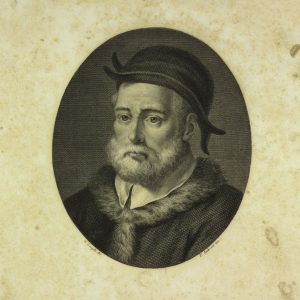
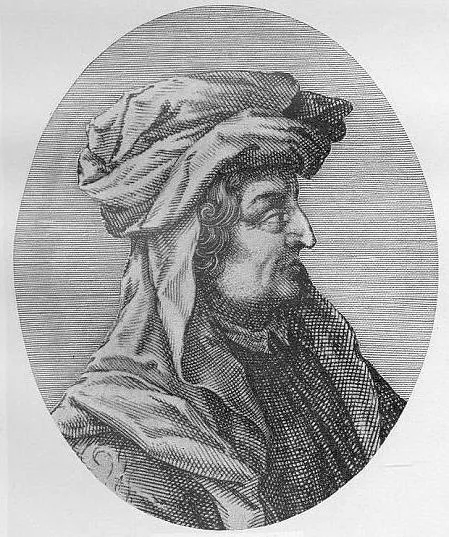
Leonardo Bruni, called Leonardo Aretino or Leonardo d’Arezzo, was born in Arezzo in 1369. Aretino drew not only his identity, but also his first fundamental cultural inspirations from his hometown. Immersed in the heritage of a place deeply rooted in history and art, Bruni developed an early interest in literature and ancient philosophies. This city, a crossroads of humanist and Renaissance currents, offered Bruni a stimulating context where he could nurture his critical spirit and thirst for knowledge.
Leonardo Bruni’s Youth in Arezzo
The youth spent in Arezzo was a crucial training period for him, during which he assimilated those cultural values and love for antiquity that would later characterise his entire oeuvre. Arezzo, with its libraries, its masters and its monuments, was the first training ground for Bruni, who learnt there how to combine the depth of classical study with the liveliness of humanistic enquiry.
Training
In Leonardo of Arezzo’s education, the move to Florence represents a fundamental chapter. In this city, the intellectual centre of Italian humanism, Bruni had the opportunity to study under Coluccio Salutati, secretary of the Florentine Republic and illustrious humanist. This experience not only enriched his knowledge of classical authors, but immersed him in a lively cultural circle that nurtured his passion for antiquity and Greek and Latin philosophy.
The Florentine milieu for Leonardo of Arezzo
The Florence of the 15th century, with its intellectual ferment, offered Bruni an unparalleled setting to refine his critical thinking and perfect his skills as a writer and translator. These formative years proved decisive, laying the foundations for his future career as a humanist, historian and translator, and marking the beginning of his rise as one of the most influential figures of the Italian Renaissance.
Contributions to the Italian Language
Leonardo of Arezzo, through his work and intellectual engagement, played a crucial role in the enhancement of the Italian language. Through his translations of classical Greek works into Latin and his literary production in the vernacular, Bruni contributed significantly to the debate on the‘language question’, promoting the use of Italian as a language of culture.
A Renaissance populariser
His linguistic and stylistic choices were dictated by a clear intent: to make the treasures of classical culture accessible to the widest possible audience. This innovative vision not only enriched the cultural fabric of his time, but laid the foundations for the development of modern Italian, influencing generations of writers and humanists. His dedication to an ideal of clarity, elegance and precision in language marked a turning point in the perception of the Italian language, elevating it to a privileged vehicle for the transmission of knowledge.
The Historical Work
Leonardo of Arezzo, in his ‘Historiae Florentini Populi’, redefined the approach to historiography. Detaching himself from medieval chronicles, he introduced a division of history into eras: ancient, medieval and modern, marking a forerunner of modern historical conception. His work not only highlighted the centrality of Florence in Renaissance culture but also offered a methodology based on the critical analysis of sources. Bruni strove to narrate events in an eloquent style, making history accessible and engaging.
Innovation and modernity
His innovative vision made him a pioneer, contributing to the birth of modern historiography. Bruni’s dedication to historical truth and elegant presentation elevated historical narrative to new prestige, influencing generations of historians.
The Political Career in Florence
During his stay in Florence, Leonardo of Arezzo assumed a prominent role in the city’s political life, becoming Chancellor of the Republic. In this capacity, Bruni worked closely with Cosimo de’ Medici, an influential statesman and patron of the arts, helping to strengthen the link between political power and the humanistic cultural world. His diplomatic skills and profound knowledge of ancient literature made him an essential point of reference for the Florentine ruling elite.
Bruni and the Renaissance
Through his work, Bruni helped promote an image of Florence as the centre of the Renaissance, advocating policies that favoured the development of the arts and sciences. His political career reflected his belief that culture and education were fundamental to the well-being of society, a principle that continues to influence modern thought.
The Dialogue with Humanism
In the cradle of the Renaissance, Leonardo of Arezzo engaged in a lively intellectual exchange with other humanists, enriching the cultural debate of the time. These dialogues, which ranged from philosophy to literature, from ethics to politics, reflected his deep conviction in the importance of classical culture for contemporary society. Through letters, treatises and speeches, Bruni influenced and was influenced by the thinkers of his time, helping to shape a shared humanistic ideal.
The dialogue with other intellectuals
His ability to weave meaningful relationships with key figures such as Poggio Bracciolini and Niccolò Niccoli emphasised the importance of dialogue and collaboration between intellectuals. This constant exchange not only enriched the cultural life of Florence and Italy, but left a lasting legacy, testifying to the central role of communication and debate in human progress.
Last Years and Legacy of Leonardo of Arezzo
In his final years, Leonardo of Arezzo continued to profoundly influence the Italian cultural landscape, leaving an indelible mark on historiography, philosophy and humanism. His death in Florence in 1444 marked the end of an era, but his legacy survived well beyond his lifetime. Bruni was buried in the prestigious Basilica of Santa Croce, alongside other giants of the Renaissance, an honour that testifies to the immense esteem in which he was held.
The Legacy of Historiae Florentini Populi
His work Historiae Florentini Populi remains a milestone in historical literature, and his dedication to translating classical works contributed to preserving and disseminating the cultural heritage of antiquity. Bruni’s dedication to humanism and his innovative approach to historiography have left a lasting legacy, inspiring future generations to pursue knowledge and truth with the same critical spirit and passion for learning.
Conclusion: Leonardo Bruni’s legacy and the link with Arezzo
Leonardo of Arezzo’s life and work represent an indissoluble link between Arezzo and the Italian Renaissance, bearing witness to how this city contributed to the formation of key figures in humanist culture. Bruni’s legacy, with its commitment to philosophy, historiography and the Italian language, invites us to reflect on the importance of Arezzo as a cradle of talents and ideas that illuminated the path to modernity.
An invitation for guests of Antiche Mura
We invite guests of the B&B Antiche Mura to explore the streets of Arezzo, to immerse themselves in the stories and landscapes that have inspired Bruni and so many other artists and thinkers. Its history shows how culture and art can flourish in places rich in history, and how Arezzo continues to be a point of reference for those seeking inspiration and beauty.