
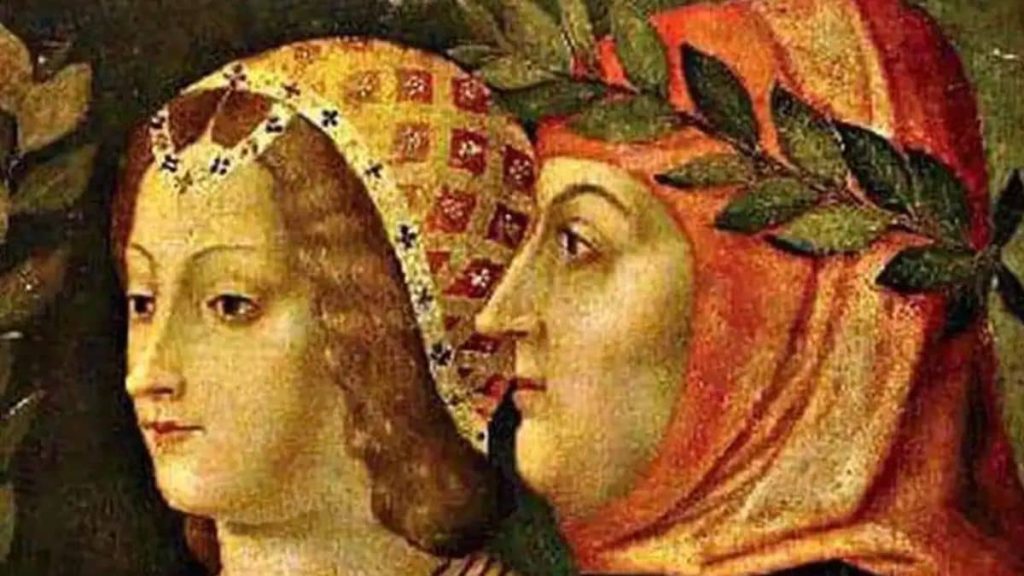
Francesco Petrarca and the City of Arezzo
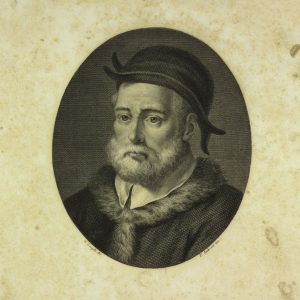
Francesco Petrarca was born in the Borgo dell’Orto, in the heart of the city of Arezzo, on July 20, 1304, to the notary Ser Petracco and Eletta Canigiani (or Cangiani). His father Petracco, who lived for several years in Florence, was a friend of Dante Alighieri and, due to his political background, was—like the Poet of the Divine Comedy—exiled from the city of the Medici.
Arezzo was Petrarch’s home during the early years of his childhood, an essential period for the formation of a person’s character. At that time, Arezzo was a lively and active city—an important economic and artistic center, renowned for the production of fine textiles and for hosting artists and intellectuals of international fame: a melting pot of creativity that surely influenced the poet in a positive way.
Francesco Petrarca: A Poet Always on the Move
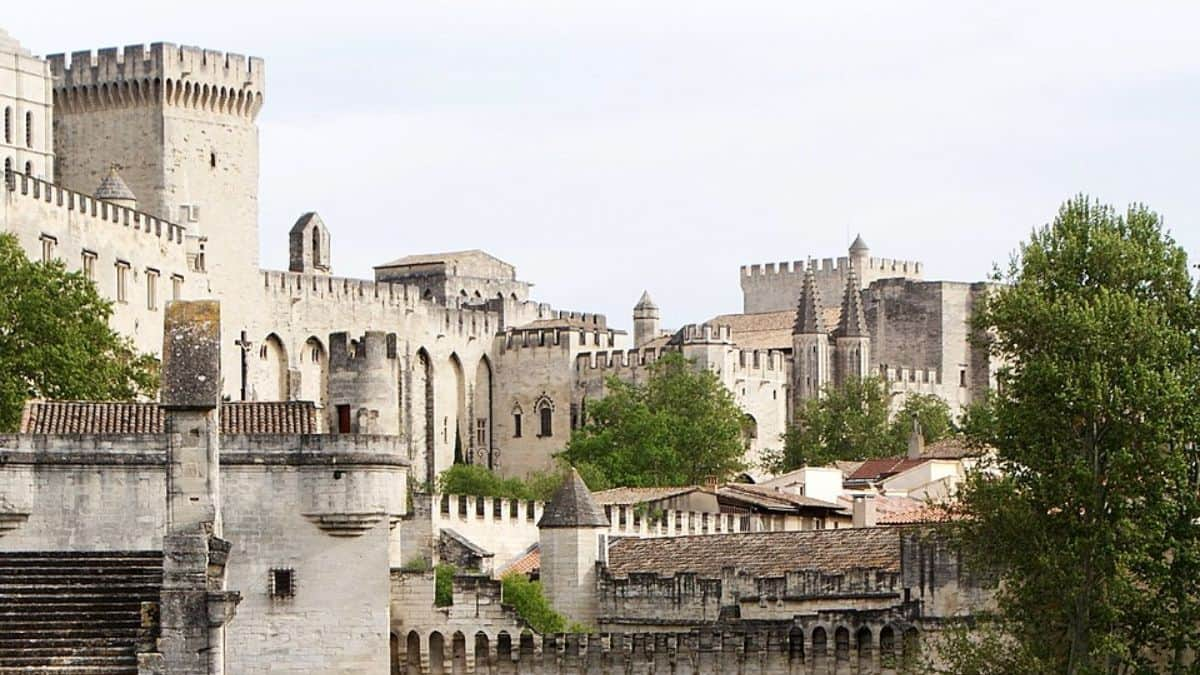 Avignon – photo by Paolo Picciati, Wikimedia Commons
Francesco Petrarca is considered one of the fathers of Italian literature and humanism: a writer, poet, philosopher, and philologist, he spent most of his life traveling, constantly broadening his horizons. It is no coincidence that Petrarch rejected the idea of the Homeland as Mater and saw himself as a citizen of the world.
During his life, he spent several periods in France, particularly in Montpellier, where he began his legal studies, and later in Avignon, where he lived at various times. Petrarch also lived in Rome, Milan, Venice, and finally in the area around Padua. It was in Veneto, in Arquà, that a stroke took the Poet’s life in 1374.
The Works of Francesco Petrarca
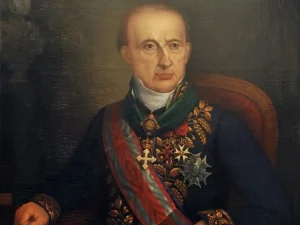
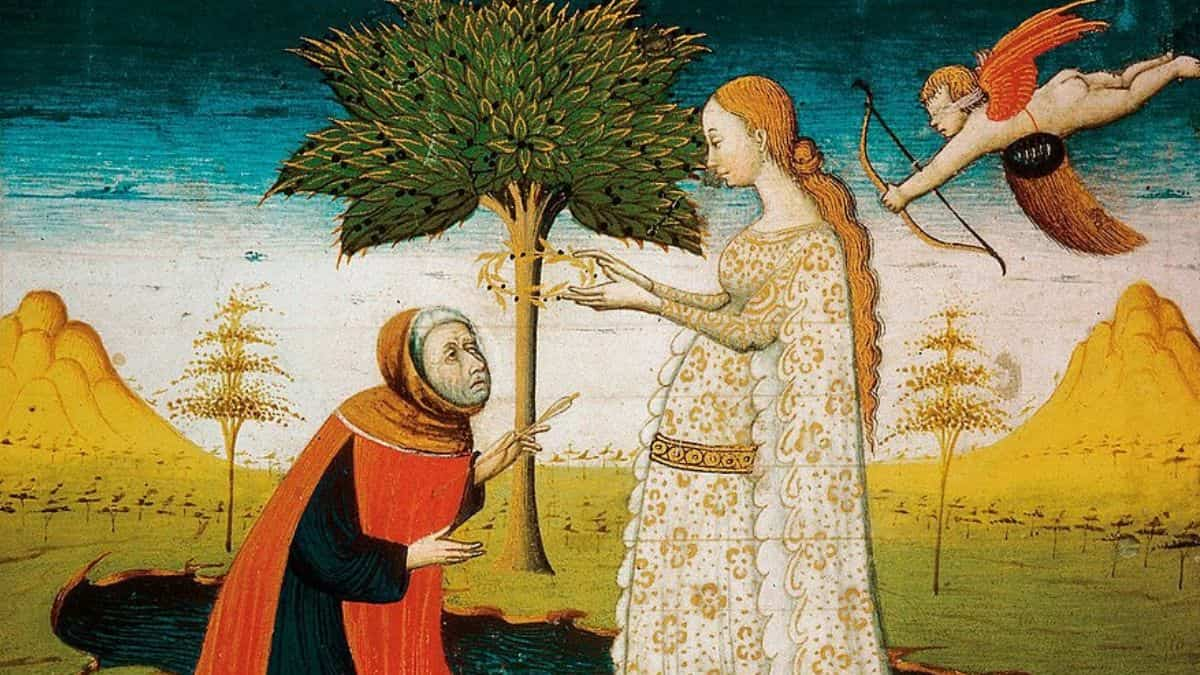 photo from Wikimedia Commons, anonymous author
Petrarch is best known for his poetic works, which include love lyrics, poems in the vernacular, and works in Latin. Among his most famous works are the *Canzoniere* and *Trionfi*, both considered masterpieces of Renaissance poetry.
A central figure in Petrarch’s poetry is “Laura”: a woman—met by the Poet in the Church of Santa Chiara in Avignon—to whom the young Francesco dedicated a significant portion of his work, giving her much space in his *Canzoniere*.
The *Canzoniere*—whose original title is *“Francisci Petrarchae laureati poetae Rerum vulgarium fragmenta”*—is perhaps Petrarch’s best-known work. It took him about forty years to complete, through numerous revisions and rewritings.
The *Trionfi* are another major work by Francesco Petrarca. In this collection, across six chapters, Petrarch explores and focuses on themes such as Love, Chastity, Death, Fame, Time, and Eternity.
Master and Father of Italian Literature
Petrarch was prolific in his letters, addressing literary and political topics. He divided them into *Familiares*, *Seniles*, and *Sine nomine*—the latter dealing with contemporary issues such as papal corruption. In 1347, the work *Secretum* emerged as a dialogue between Petrarch and Saint Augustine. In it, Truth is personified as a woman who guides the poet through deep introspection. Saint Augustine illuminates Petrarch on the value of life and the danger of worldly attachments, highlighting how love for Laura and the pursuit of glory are chains for Petrarch’s soul.
In 1351, Petrarch began *I Trionfi*, as previously mentioned. The work presents the triumph of six values: Love, Chastity, Death, Fame, Time, and Eternity. At the center of Petrarch’s thought stands Man, with his greatness and fragility. Petrarch promoted a synergy between Latin culture and Christian civilization. This renewed vision of classical culture makes him a forerunner of Humanism, profoundly influencing the fifteenth century.
Today in Arezzo
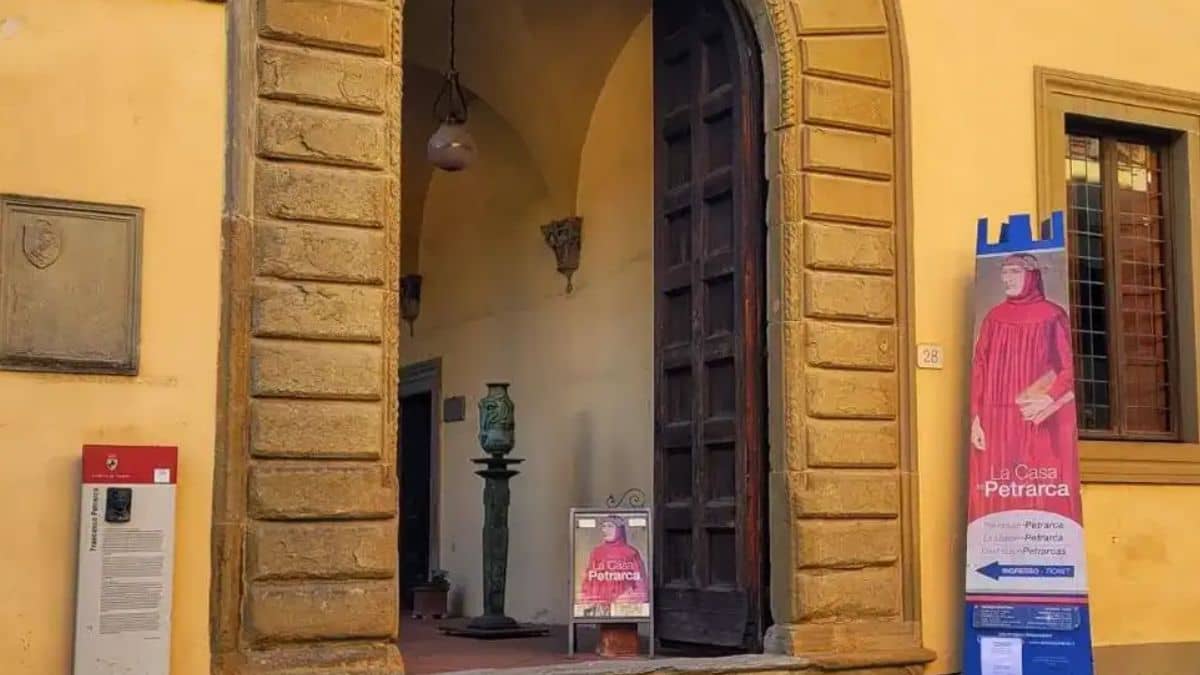
Petrarch himself wrote, in a letter responding to his friend Giovanni Aretino—curious about his origins—that not only was he born in Arezzo, but that he was born *“in vico intimo”*, meaning in the very heart of the urban settlement.
The historic Casa Petrarca is located at Via dell’Orto 28, just a few steps from the Cathedral of San Donato and near the top of the hill overlooking the modern city.
The house hosts the museum dedicated to Francesco Petrarca and is home to the Accademia Petrarca di Lettere Arti e Scienze, inside a magnificent historic palace.
A visit to Petrarch’s House offers the opportunity to deepen your knowledge of the Poet—surely one of the most important figures ever born in the city of Arezzo.
How to Reach Casa Petrarca
The historic building is located in the heart of the old town. Tourists wishing to visit the headquarters of the historic Accademia Petrarca can easily reach Via dell’Orto by parking at Pietri parking lot and taking the convenient escalator that leads directly in front of the Cathedral.
Those arriving by train only need to walk uphill toward the Cathedral along the main Corso Italia to reach Via dell’Orto at the top of the rise.
Accademia Petrarca di Lettere, Arti e Scienze
The historic building now houses the Accademia Petrarca di Lettere, Arti e Scienze, and the Museo di Casa Petrarca. The palace is open to the public on Saturdays and Sundays from 10:30 a.m. to 5:30 p.m.
Inside, the museum preserves large Renaissance canvases by Tuscan painters, relics, and Petrarchan materials. Also notable is a collection of 250 ancient coins and a library rich in works and volumes related to Petrarchism.
The Proximity Between B&B Antiche Mura and the House of Petrarca
The B&B Antiche Mura is an ideal choice for those wishing to immerse themselves in Aretine history and explore the legacy of the Master of Humanism, Francesco Petrarca. You will find us just a few steps away from the House of Francesco Petrarca, as well as from all the cultural attractions our beautiful city has to offer. We look forward to welcoming you!
Useful Links
Website of the Accademia Petrarca